
Tools and molds industry
UMW laser welding and cleaning machines offer high precision, high efficiency, and high reliability in their specific applications within the tool and mold industry.
Challenges in Mold & Tooling Industry
Micro Cracks and Surface Wear
- During long-term production, molds are prone to developing microcracks, edge chipping, and surface wear due to thermal fatigue.
- If not repaired in time, these defects can lead to dimensional deviation, product defects.
Traditional Welding Causes Deformation
- Conventional TIG or arc welding introduces excessive heat input, often resulting in deformation, hardening, or post-weld machining.
- This increases repair costs, downtime, and risks of scrapping high-value molds.
Manual Cleaning Damages Mold Surface
- Mechanical grinding or chemical cleaning methods can easily scratch mold surfaces or remove base material.
- Repeated manual cleaning reduces surface precision and affects product appearance quality.
Challenges in Mold & Tooling Industry
Micro Cracks and Surface Wear
During long-term production, molds are prone to developing microcracks, edge chipping, and surface wear due to thermal fatigue.
If not repaired in time, these defects can lead to dimensional deviation, product defects.
Traditional Welding Causes Deformation
Conventional TIG or arc welding introduces excessive heat input, often resulting in deformation, hardening, or post-weld machining.
This increases repair costs, downtime, and risks of scrapping high-value molds.
Manual Cleaning Damages Mold Surface
Mechanical grinding or chemical cleaning methods can easily scratch mold surfaces or remove base material.
Repeated manual cleaning reduces surface precision and affects product appearance quality.
Traditional vs Laser Solutions
Comparison Item
Traditional Methods
Laser Solutions
Precision
Highly dependent on operator experience
Micron-level precision with stable energy control
Heat Input
High and difficult to control
Minimal and precisely controllable
Risk of Deformation
High deformation risk
Extremely low deformation risk
Surface Damage
Possible damage and rework
Non-contact or low-impact processing
Post-processing
Grinding and polishing required
Minimal or no post-processing
Automation Capability
Difficult to automate
Easy integration with robotic systems
Typical Mold Applications
Mold crack repair laser welding
Precisely repairs micro cracks and fractures on mold surfaces with minimal heat input, restoring mold strength and extending service life without deformation.
Mold Identification & Laser Engraving
Laser engraving provides permanent, high-contrast markings such as serial numbers, logos, and QR codes for easy mold identification and traceability.
Pre- & Post-Welding Mold Cleaning
Ensures clean welding areas before repair and removes oxidation after welding, improving weld quality and overall mold performance.
Laser Cleaning for Mold Maintenance
Non-contact laser cleaning removes oil, rust, oxidation, and residues from mold surfaces without damaging the base material or fine structures.
How to Choose a Machine?

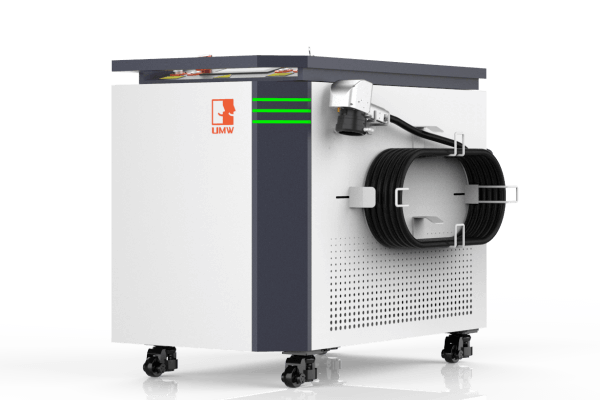
QCW Laser Mold Welding Machine UW-Q 150/300
- The QCW laser welding machine is designed for high-precision mold repair, providing stable energy output and minimal heat input.
- With high rotational freedom, it can rotate 360° in all directions, achieving truly blind-spot-free welding.
- It is ideal for crack repair, edge build-up welding, and fine mold welding without causing deformation.
Pulsed Laser Cleaning Machine UC-P 5/10
- Equipped with a pulsed laser, it offers an operating time of up to 100,000 hours.
- It can efficiently clean metal, wood, and stone without damaging the materials.
- Features 8 flexible cleaning modes.
Related Articles

QCW mold laser welding machine is designed for precision metal welding and can be used for reliable mold repair and modification.

This article explores how laser cleaning handheld fiber laser cleaning machine can improve efficiency and ensure the longevity of tire molds.
Get a Free Quote
Please contact our technical team, we will provide you with the necessary materials or technical support as soon as possible.